
Are you wondering how to enclose an acrylic bathtub so that it looks attractive, lasts a long time, and is convenient for everyday use? There are several options to choose from, but the most popular choices are enclosing the tub with ceramic tiles or using a ready-made acrylic panel. Each of these methods has its own advantages, limitations, and installation requirements.
If you are planning to enclose your bathtub, you should first decide whether a dedicated acrylic panel or a permanent structure finished with tiles would be better. The former is easier to install and provides better access to the plumbing. The latter offers more design flexibility but requires careful construction and moisture-proofing. For whirlpool (hydromassage) bathtubs, we strongly recommend using a removable, dedicated panel. If you prefer tiles, the structure must be designed in a way that allows the panel to be removed without damaging the tiling. In this article, you will learn about the pros and cons of each solution, as well as the costs associated with each option.
Dedicated acrylic panel – a quick way to enclose a bathtub
A ready-made acrylic panel is designed to fit a specific bathtub model, taking into account its dimensions and shape. It allows for an aesthetic finish to the front of the bathtub without the need to build a supporting structure for tiles. This is a practical solution for both standard rectangular bathtubs and select corner models.
A dedicated bathtub panel is particularly useful when quick installation, easy cleaning, and access to the siphon (drain trap) are required. For whirlpool bathtubs, it is best to choose a panel that can be removed for maintenance or servicing.
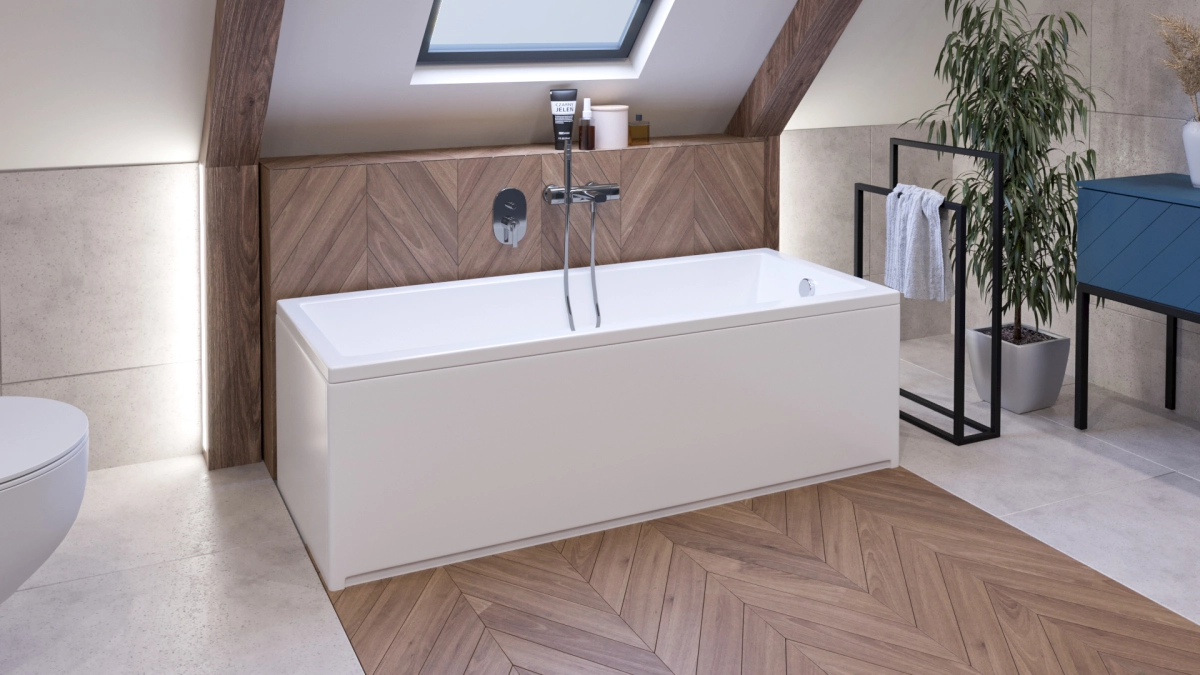 Acrylic bathtub with a panel – Quatro Mini model
Advantages of an acrylic bathtub panel
- Simple installation – installing the panel does not require laying tiles, grouting, or building a full supporting structure.
- Easy cleaning – the smooth surface is convenient for everyday use.
- Perfect fit – the panel is designed to match the specific shape and dimensions of the bathtub.
- Removability – the mounting system allows for easy access to the plumbing.
- Less finishing work – installing an acrylic panel is faster than creating a tiled enclosure.
Disadvantages of an acrylic bathtub panel
- Limited availability of panels for non-standard bathtub models.
- Fewer design options compared to tiles.
- Necessity to verify compatibility between the panel and the bathtub.
- Additional cost for purchasing a dedicated panel.
Before making a purchase, check whether the manufacturer offers a panel for your chosen model and ensure that it allows for convenient access for maintenance or repairs.
How much does an acrylic bathtub panel cost?
The cost of a dedicated acrylic panel depends on the type of bathtub, its dimensions, and the manufacturer. For a standard rectangular bathtub, the price of a panel typically ranges from 250 to 800 PLN.
Enclosures for corner or asymmetric bathtubs can cost anywhere from 500 to 1,500 PLN or more.Installing an acrylic enclosure is extremely simple and can usually be done on your own, without the need to hire a professional. Just follow the manufacturer's instructions. If, however, you decide to have someone else handle the installation, the service cost will typically range from 100 to 500 PLN.
This means that the total cost of purchasing and installing an acrylic enclosure for a standard rectangular bathtub can be around 350–1,300 PLN. For corner or asymmetric bathtubs, the price may be higher.
Before making a purchase, it is worth checking whether the manufacturer offers an enclosure specifically designed for your chosen model. For bathtubs equipped with hydromassage systems, the ability to remove the panel is particularly important, as it provides access to the plumbing and mechanical components for inspections or repairs.
Permanent bathtub enclosure using ceramic tiles
A permanent bathtub enclosure involves building a supporting structure and finishing it with ceramic tiles, porcelain stoneware, or mosaic. This approach allows for a modern look that coordinates with the bathroom floor and walls.
Incorporating waterproofing into the bathtub enclosure is essential in a bathroom, where the structure may be exposed to moisture and splashing water.
Using the right materials and ensuring careful workmanship reduces the risk of damage to the enclosure.What materials can be used to build an enclosure?
Depending on the design, various construction materials can be used:
- Construction boards designed for bathrooms – these make it easier to prepare the surface for tiling.
- Water-resistant gypsum boards (GKBI type) – these can be used within appropriate construction systems, provided they are adequately protected against moisture.
- Aerated concrete blocks – these allow for a stable enclosure around the bathtub, though they make future removal more difficult.
- PVC panels – a lightweight option for finishing the front of the enclosure.
- MDF and other wood-based materials – it is essential to verify whether they are suitable for use in a bathroom environment.
- Wood or wood-like materials – these provide a natural look but require proper protective treatment.
When using wood, PVC panels, or MDF for a bathtub enclosure, ensure that the materials chosen are specifically intended for such use. Particular attention must be paid to protecting edges and joints that may come into contact with water.
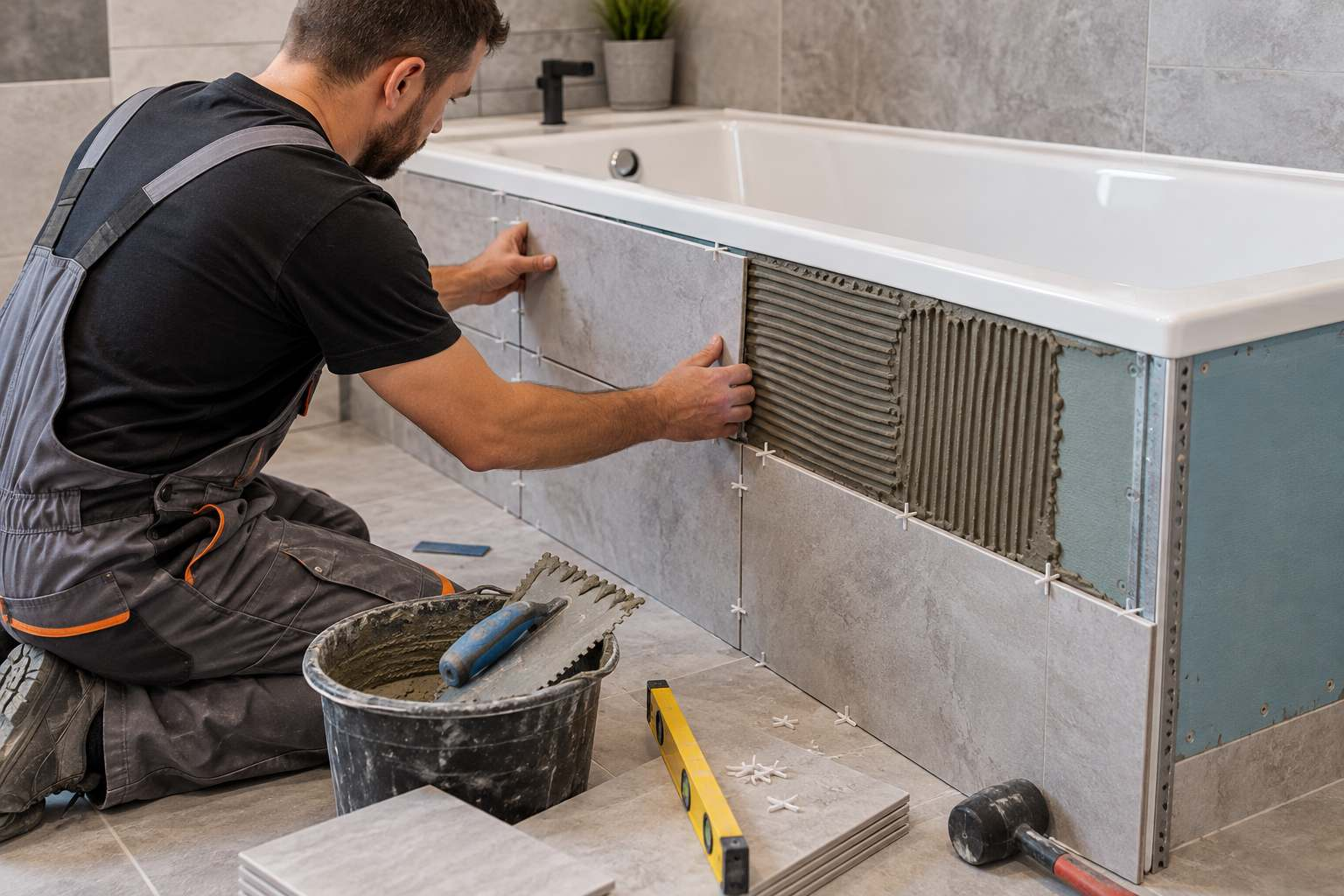 Tiled bathtub enclosure – renovation featuring the BERNO 150x70 bathtub
Advantages of a tiled enclosure
- Great freedom in design and color selection.
- Ability to match the front panel with the rest of the tiles.
- Possibility to incorporate niches and shelves.
- Custom-fitted to the specific shape of the bathtub.
Disadvantages of a tiled enclosure
- More extensive work and a longer completion time.
- Requirement for proper sealing of the structure.
- Higher labor costs.
- More difficult access to plumbing if an inspection hatch is not included.
- Risk of damaging the tiles during improper removal.
If you intend to build the bathtub enclosure yourself, keep in mind that Saving on labor costs should not mean forgoing waterproofing or access for maintenance.
How much does it cost to tile a bathtub enclosure?
The cost of a permanent, tiled bathtub enclosure depends on the materials chosen, the dimensions of the tub, and the scope of the work. Structural materials—such as construction boards, profiles, or aerated concrete blocks—typically cost between 200 and 500 PLN. You should also budget an additional 150–400 PLN for waterproofing, sealing tapes, adhesive, grout, and sanitary-grade silicone. Ceramic tiles or mosaics generally cost between 100 and 500 PLN, though prices can be higher for premium materials.
If you hire a professional, the labor costs for constructing a standard bathtub enclosure can range from approximately 700 to 1,800 PLN.
The total cost for a tiled bathtub enclosure is roughly 1,200–3,200 PLN, excluding the price of the bathtub itself and any additional plumbing work. Costs may be higher for corner or semi-circular tubs, intricate mosaic designs, or structures that include built-in shelving.
You can also build the enclosure yourself, which helps reduce labor expenses. However, it should be remembered that proper preparation of the supporting structure, waterproofing, and the provision of access for maintenance are crucial for the durability of the enclosure.
Enclosing rectangular, corner, and semicircular bathtubs
Enclosing a rectangular bathtub is usually the simplest task. You can use a ready-made panel or build a custom structure to be finished with tiles. The dimensions of the bathtub, the height of the rim, and the position of the drain must be taken into account before installation begins.
Enclosing a corner bathtub requires precise fitting to the shape and dimensions of the specific model. When choosing an enclosure for a corner tub, you must also consider whether it is a left-hand or right-hand version. If purchasing a ready-made panel, ensure it is compatible with your specific bathtub.
Enclosing a semicircular bathtub is more challenging when using tiles. Mosaics or small-format tiles make it easier to finish a curved front. Using a dedicated, purpose-built enclosure for a semicircular tub can significantly reduce the amount of installation work required.
Regardless of the shape, a functional bathtub enclosure must provide stability and access to the plumbing. When planning the enclosure, it is therefore worth considering not only the appearance but also how future maintenance or repairs will be carried out.
Enclosing a whirlpool (hydromassage) bathtub – access and ventilation
Enclosing a whirlpool bathtub requires a specific approach. Beneath the bathtub, there are pumps, motors, pipes, and a control system—all of which require proper operating conditions as well as access for inspection, maintenance, and potential repairs.
The best solution is a dedicated, removable acrylic panel. It provides an aesthetic finish for the bathtub while allowing easy access to the internal components, eliminating the need to break through tiles or dismantle permanent structures. This is particularly important, as even a correctly installed whirlpool tub may require servicing in the future.
Why is an access panel essential for a whirlpool tub?
An access panel provides a way to reach the system components located beneath the bathtub. Its size and placement should be planned before any installation work begins.
The access opening must be large enough to allow for necessary work on the pump, motors, control unit, siphon, and plumbing connections. Depending on the specific design of the unit, more than one access opening may be required.
An access panel that is too small can make repairs difficult or even impossible, potentially requiring the entire enclosure to be dismantled. Therefore, providing service access must be considered an essential part of the enclosure design, rather than an afterthought that only comes to mind when a breakdown occurs.
When using a dedicated acrylic enclosure, planning for service access is generally more straightforward. Before making a purchase, it is worth checking how the panel is attached and ensuring that it can be removed in accordance with the manufacturer’s instructions.
Ventilation for a Bathtub Enclosure – Why Is It So Important?
Ventilation for a whirlpool bathtub enclosure is crucial for maintaining the operating conditions specified by the manufacturer. Motors and other components often require a specific level of airflow; therefore, they must never be enclosed in a completely sealed, unventilated space.
A lack of proper ventilation can lead to components overheating and the equipment malfunctioning. An access panel alone does not always provide sufficient air circulation.
Ventilation requirements must be considered separately.When planning the enclosure, you must:
- check the ventilation requirements in the manual for your specific model;
- provide appropriate ventilation openings or other solutions as specified by the manufacturer;
- ensure that air inlets and outlets are not obstructed;
- guarantee access to the equipment without the need to damage the finish;
- take into account the placement of pumps, motors, and control components.
Do not alter the ventilation requirements on your own, and do not assume that a small gap near the floor will be sufficient. The solution must align with the design and recommendations provided by the bathtub manufacturer.
Can a whirlpool bathtub be tiled?
Yes. It is possible to tile a whirlpool bathtub, but the structure requires careful planning. Unlike with a standard bathtub, it is not enough to simply build a fixed enclosure with a small access panel.
If you want a tiled finish, the best approach is to construct the enclosure on an independent support structure that can be moved away from the bathtub without damaging the tiling. This solution maintains an aesthetic finish while facilitating access to the equipment.
When designing such a structure, the following must be taken into account:
- stable mounting of the support frame and secure structural backing;
- sufficient space to move aside or remove the enclosure;
- an adequately sized service access point;
- ventilation in accordance with the manufacturer’s requirements;
- protection of the structure against moisture;
- the ability to reattach the enclosure after service work is completed.
Tiles must not be bonded in a way that prevents the support frame from being moved aside. Furthermore, permanent connections between the enclosure and the bathtub should be avoided if they obstruct access to the components.
Before beginning work, it is advisable to consult with the contractor on the design and verify that the planned removal method does not violate the bathtub manufacturer’s recommendations.
What type of enclosure is best for a whirlpool bathtub?
In most cases, a dedicated, removable acrylic panel is the most practical solution. It is easier to install and provides more convenient access to the plumbing and electrical components compared to traditional tiled enclosures.
A permanent tiled enclosure may be a good choice if you are aiming for a specific interior design aesthetic. However, it requires the use of an appropriate support system, planning for potential dismantling, and the provision of access points (inspection hatches) and ventilation.
Remember: with a whirlpool (hydromassage) bathtub, aesthetics must not compromise serviceability. A well-designed enclosure should allow for the inspection and repair of components without damaging the tiles, while simultaneously providing the ventilation necessary for the motors to operate correctly.
FAQ – Frequently Asked Questions
Which is better: an acrylic panel or a tiled enclosure?
An acrylic panel is simpler to install and can be easier to remove. Tiled enclosures offer greater design flexibility but require a supporting structure, waterproofing, and careful finishing. For whirlpool bathtubs, a dedicated, removable enclosure is recommended.
How much does it cost to enclose a bathtub?
A dedicated acrylic panel, including installation, typically costs between 450 and 1,400 PLN for a standard rectangular bathtub. A tiled enclosure usually costs around 1,200 to 3,200 PLN. The price depends on the materials used, dimensions, and labor costs.
Must a whirlpool bathtub have access points and ventilation?
Yes. You must provide access to all components that may require servicing, as well as ventilation in accordance with the manufacturer's instructions. This is essential for the safe and proper operation of the unit.
Can a corner bathtub be enclosed using a ready-made panel?
Yes, provided the manufacturer offers a panel specifically designed for that particular model. Be sure to check the shape, dimensions, and attachment method.
Summary
The choice of enclosure method depends on the desired aesthetic, your budget, and how the bathtub will be used. A dedicated acrylic panel is a practical choice when quick installation and easy access to the plumbing are priorities. A permanent enclosure finished with tiles is well-suited for custom bathroom designs.
For whirlpool (hydromassage) bathtubs, we recommend using a removable, purpose-built panel. If you opt for tiles, the structure must allow the cladding to be removed without causing damage. Remember to include an access panel, ensure proper ventilation, and provide adequate moisture protection. Following these steps will result in a bathtub enclosure that is aesthetically pleasing, durable, and practical for everyday use.